Longfellow Bridge at Dusk: Salt-and-Pepper Towers Over the Evening Rush
The bridge that carries the Red Line and Massachusetts Avenue traffic between Boston and Cambridge is functional infrastructure — and the city's favorite silhouette.
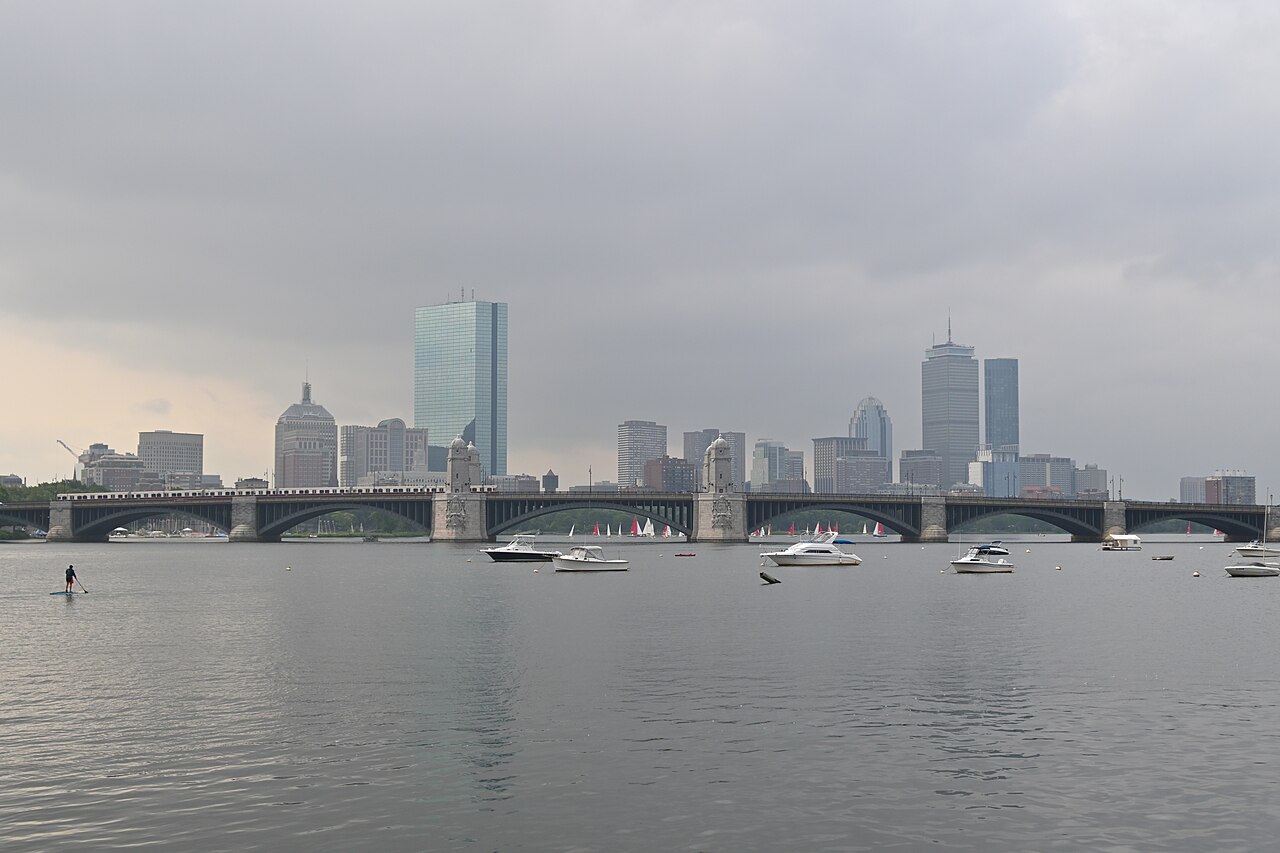
Ask a Bostonian to draw the city from memory and there is a fair chance the Longfellow Bridge appears in the sketch: four granite towers — the famous salt-and-pepper shakers — standing over the Charles River between Beacon Hill and Kendall Square.
The bridge does double duty that few American landmarks manage. Its roadway carries Massachusetts Avenue traffic, while the MBTA Red Line runs down its center, trains crossing the river in the open air between Charles/MGH and Kendall/MIT stations. From those train windows, riders get the single best free view in the transit system: the Back Bay skyline, the Esplanade and the basin spread out on both sides.
Opened in the first years of the twentieth century and rebuilt in a major state rehabilitation project in the 2010s, the Longfellow is a working bridge that happens to be beautiful. Its towers were designed as ornament and structure at once, and its pedestrian walkways make it one of the great evening walks in either city — Boston on one end, Cambridge on the other, the river doing the entertaining in between.
November dusk is its best hour. The office lights come on in the Hancock and the Prudential, the last rowing shells come off the water, and the Red Line crosses in a ribbon of lit windows. Commuters who have made the trip ten thousand times still look up from their phones for it.
Cities are remembered by their crossings. Boston is lucky in its memory: a bridge named for a poet, built like a fortress, and still carrying the evening rush home.